


Be first to read the latest tech news, Industry Leader's Insights, and CIO interviews of medium and large enterprises exclusively from The Cyber Security Review

Central Hudson
Stress Management and Wellness in Cybersecurity: The Human Factor

Danielle C
Danielle C. is the Director of Information Security and Corporate Security at Central Hudson, overseeing cybersecurity and and physical security. She ensures the organization’s digital and operational assets are protected while promoting security awareness and resilience across the company. She also is a wellness coach where she focuses on stress management and wellness for cybersecurity professionals.
Cybersecurity professionals operate in an environment unlike almost any other. They are the frontline defenders in an unseen war, constantly vigilant against a barrage of evolving threats. This relentless monitoring, coupled with the high-stakes pressure of protecting critical systems and sensitive data, creates a unique and often overwhelming level of stress. Every decision can have profound consequences, and the sheer volume of alerts leads to “alert fatigue,” where the brain becomes desensitized to constant alarms. This sustained state of high alert inevitably takes its toll, manifesting as chronic stress and burnout, directly impacting an organization’s security posture.
Why Stress Management Matters
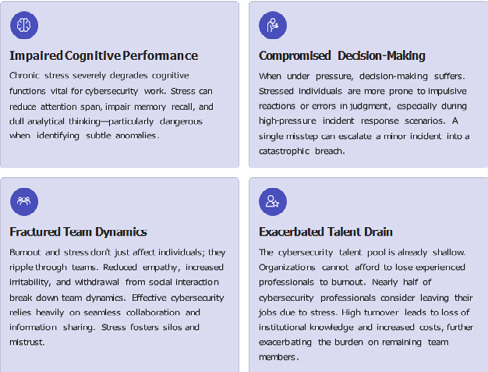 The high-stakes world of cybersecurity places immense pressure on its professionals. Ignoring the psychological toll isn’t just detrimental to individuals; it directly undermines an organization’s security posture. Effective stress management is a strategic necessity.
Building a Culture of Wellness
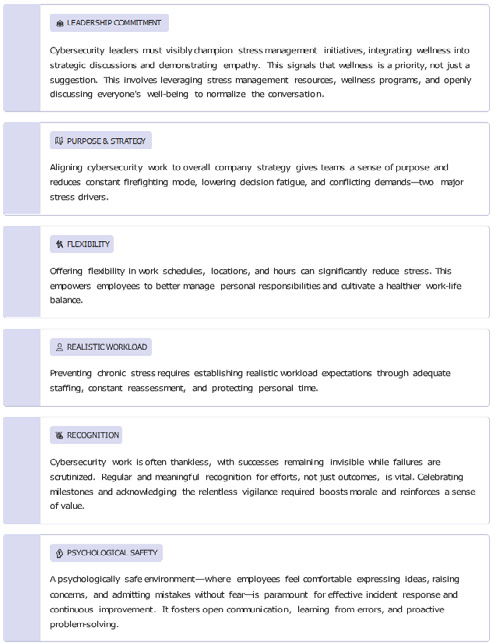
Creating an environment where cybersecurity professionals can thrive requires a fundamental shift in culture. Cybersecurity leaders must recognize that team well-being is a core component of security posture. A robust culture of wellness is one where it is openly discussed, support is readily available, and practices prevent burnout.
Practical Strategies
Addressing stress requires combining individual self-care with organizational support.
"Investing in the health and resilience of cybersecurity professionals strengthens defenses. Burnout weakens them, wellness empowers them."
Mindfulness s Meditation
Even 5-10 minutes daily can significantly reduce stress and improve focus. Cybersecurity leaders should integrate short mindfulness breaks into team meetings.
Effective Time Management
 Techniques like the Pomodoro Technique help structure work and breaks. Cybersecurity leaders should promote realistic project timelines and discourage excessive overtime.
Prioritize Physical Health
Regular activity, a balanced diet, and consistent sleep schedules are crucial. Cybersecurity leaders should model these behaviors for their teams.
Open Communication
Communication and vulnerability are essential. Individuals should actively participate in peer support groups, while cybersecurity leaders should normalize psychological safety discussions and establish coaching programs.
Prioritize Fun
Through personal hobbies and loved ones, and team-building activities while at work—prioritizing fun reduces stress and strengthens resilience.
Conclusion
The strength of our digital defenses is inextricably linked to the well-being of those who stand at the front lines. Cybersecurity is fundamentally a human endeavor. Investing in the health, resilience, and wellness of cybersecurity professionals is not only strategic but imperative. This directly translates into more robust security. A burned-out team is a vulnerable team, while a supported, thriving team is the strongest firewall an organization can possess.
By embracing this people-first approach, we can build a future where cybersecurity teams are not just technically brilliant but also emotionally resilient and capable of confronting the most sophisticated threats with sustained vigilance and unwavering strength.
The articles from these contributors are based on their personal expertise and viewpoints, and do not necessarily reflect the opinions of their employers or affiliated organizations.
